KEYNOTE SPEAKERS

Valentina Busini | Politecnico di Milano (Italy)
Prof. Valentina Busini has expertise in safety engineering and chemical engineering. In particular, with regard to industrial safety, she usually works on the analysis of the consequences of industrial accidental events, such as the CFD modelling of: heavy gas dispersion in complex environments, dispersion of hydrogen and carbon dioxide, design of vapour curtains; and the definition of methodologies for the evaluation of industrial accidents triggered by natural events (the so-called NaTech events). As far as chemical engineering is concerned, she focuses on process intensification finding methodologies for the transformation of batch processes into continuous ones.
Title of Keynote: Advantages and Dangers of Producing and Using Hydrogen
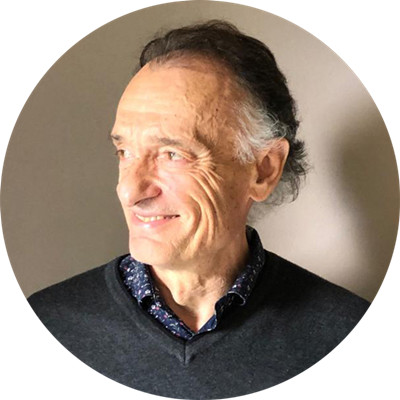
Gilles Flamant | CNRS-PROMES (France)
Gilles Flamant is Emeritus Research Director at CNRS-PROMES (France) and PI of the French Laboratory of Excellence in solar energy “SOLSTICE”. He earned an engineer degree from “Chimie Paris Tech” (ENSCP) and a PhD degree in chemical engineering from the University of Toulouse. Gilles Chairs the ExCo of SolarPACES (IEA Energy Technology Network). His current research activities focus on particle-driven CSP technologies. During the five last years, he was/is coordinating three CSP-related projects: the SOLPART and Next-CSP H2020 projects and, he is currently scientific coordinator of Powder2Power HE project.
Title of Keynote: Perspectives in particle-driven concentrating solar technology
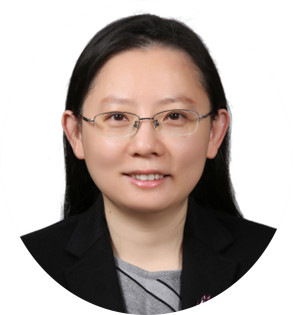
Yu Hong | Beijing Forestry University, China
Hong Yu, Professor, obtained her bachelor degree from Xi’an Jiaotong University in 2003, and doctorate from Tsinghua University in 2008. She was a visiting scholar with the CSC fund to conduct academic research at the University of Illinois at Urbana-Champaign (2015-2016). Her main research directions include microalgae-based wastewater treatment into resources and carbon emission reduction, environmental functional materials, environmental risk substance toxicity assessment. She has presided over several national-level and provincial S&T projects, including the National Natural Science Foundation of China and the Beijing Science and Technology Star Program. So far, more than 80 academic papers have been published, including 52 SCI papers, and obtained 14 national invention patents. She successively undertakes the Youth Working Committee of Algae Branch of the China Algae Industry Association, the Water Treatment and Reuse Committee of the Chinese Society of Environmental Sciences, a member of the Youth Working Committee of the Chinese Chemical Society, and some academic journals’ reviewers, etc. She has won the Beijing Science and Technology Nova Star, the China Environmental Science Society Youth S&T Award, the Water Treatment and Reuse Annual National Excellent Journal Paper Award, the leader 5000 The top paper awards of China's fine S&T journals, outstanding doctoral thesis of Tsinghua University, etc.
Title of Keynote: Direct treatment of raw swine wastewater by an engineered microalgae-bacteria consortium

Najmeh Askari | KU Leuven (Belgium)
Najmeh Askari is currently a Marie- Curie Post-doctoral researcher at KU Leuven, Faculty of Chemical and Biochemical Reactor Engineering and Safety (CREaS). Her research focuses on wastewater treatment using advanced oxidation and reduction processes. She has extensive experience in design, synthesis and characterization of photocatalyst semiconductors including porous Metal-Organic Frameworks (MOFs), perovskites, visible-light-driven heterojunctions and photocatalytic membrane for environmental decontamination. In addition to her scientific track record, she has strong experience in developing and writing competitive EU-funded research proposals She has valuable industry experience as the head of safety department in an Engineering, Procurement, Construction and Management Consulting firm. Looking ahead, she is excited by the prospect of further advancing her understanding of wastewater treatment and environmental remediation. Her vision encompasses not only the pursuit of fundamental research but also the translation of scientific insights into tangible solutions with real-world impact.
Title of Keynote: -From Pollutant to Fuel: MOF–Perovskite Photocatalysts under Concentrated Solar Light for Water Decontamination and Green Hydrogen Production